Modern shoulder arthroscopy has advanced significantly over the past decade, with innovations focused on improving surgical precision, preserving tissue, reducing recovery time, and improving long-term outcomes. For orthopedic sports medicine physicians, many of these developments are now incorporated into advanced cadaver training courses.
1. Knotless Suture Anchor Technology
Knotless fixation systems have become increasingly popular for:
- Rotator cuff repair
- Bankart (labral) repair
- SLAP repair
Benefits:
- Less operative time
- Reduced risk of knot irritation
- Lower profile repair
- More consistent tensioning of repaired tissue
2. Double-Row and Transosseous-Equivalent Rotator Cuff Repair
Modern repairs aim to restore the tendon footprint more anatomically.
Advantages include:
- Increased tendon-to-bone contact area
- Improved biomechanical strength
- Better healing potential in selected patients
- Lower re-tear rates for larger tears
3. Superior Capsular Reconstruction (SCR)
For patients with irreparable rotator cuff tears, SCR has become an important joint-preserving option.
Grafts may include:
- Acellular dermal allograft
- Fascia lata autograft
SCR can improve shoulder stability and function in appropriately selected patients.
4. Arthroscopic Biologic Augmentation
Biologic strategies continue to evolve and may be used to support healing in selected cases.
Examples include:
- Acellular dermal matrix patches
- Collagen implants
- Tendon augmentation grafts
Research is ongoing to determine which biologic approaches provide meaningful clinical benefit.
5. Remplissage for Shoulder Instability
For patients with recurrent anterior instability and engaging Hill-Sachs lesions:
- Arthroscopic Bankart repair combined with remplissage has become a widely accepted technique.
- It reduces recurrent instability in appropriately selected patients.
6. Arthroscopic Latarjet Alternatives
Although the traditional Latarjet procedure is often performed through an open approach, arthroscopic bone-block procedures are increasingly used by surgeons with advanced expertise for patients with significant glenoid bone loss.
7. 3D Surgical Planning
Preoperative imaging software now allows surgeons to:
- Measure glenoid bone loss
- Assess Hill-Sachs lesions
- Plan anchor placement
- Select graft size
- Simulate complex reconstructions
This is particularly valuable for revision instability surgery.
8. Needle Arthroscopy
Ultra-small arthroscopes can be used in select settings for:
- Diagnostic procedures
- Office-based evaluations
- Certain minimally invasive interventions
Potential advantages include reduced soft tissue disruption and lower procedural costs in appropriate cases.
9. Improved Arthroscopic Visualization
Advances in imaging include:
- High-definition (HD) and 4K arthroscopy
- Enhanced optics
- Improved fluid management systems
- Better lighting and camera technology
These improvements help surgeons identify subtle pathology and perform more precise repairs.
10. All-Suture Anchors
Compared with traditional anchors, all-suture anchors:
- Require smaller drill holes
- Preserve bone stock
- Are particularly useful in revision surgery
- Allow flexible placement in smaller anatomical areas
11. Arthroscopic Management of AC Joint Injuries
Modern techniques use:
- Suspensory fixation devices
- Cortical buttons
- Tendon graft reconstruction
- Arthroscopic-assisted reduction
These methods can reduce soft tissue disruption while restoring joint stability.
12. Biceps Tendon Procedures
Arthroscopic techniques for treating biceps pathology have evolved to include:
- Suprapectoral biceps tenodesis
- Knotless fixation methods
- Interference screw fixation
- Cortical button fixation
13. Navigation and Augmented Reality
Emerging technologies include:
- Computer-assisted navigation
- Augmented reality overlays
- Instrument tracking
- Intraoperative guidance systems
While still developing, these tools may improve precision in complex procedures.
14. Artificial Intelligence Applications
AI is beginning to support shoulder surgery by:
- Assisting with MRI interpretation
- Predicting surgical outcomes
- Identifying patients at higher risk of complications
- Helping personalize treatment planning
These applications are evolving and are not yet standard practice across all centers.
15. Advanced Cadaver-Based Surgical Education
Many continuing education programs now emphasize:
- Complex revision rotator cuff repair
- Arthroscopic instability reconstruction
- Bone-block procedures
- Superior capsular reconstruction
- Distal clavicle excision
- Biceps tenodesis
- Management of massive rotator cuff tears
- Fluoroscopy-assisted shoulder procedures when indicated
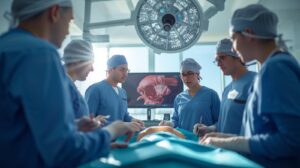
Cadaver laboratories allow surgeons to practice new implants, instrumentation, and techniques on human anatomy before introducing them into clinical practice, helping bridge the gap between didactic learning and patient care.
For organizations that host orthopedic bioskills labs, these advancements provide a strong foundation for educational programs. A comprehensive shoulder arthroscopy cadaver course might include modules on portal placement, diagnostic arthroscopy, knotless anchor techniques, rotator cuff repair, instability procedures, biologic augmentation, and management of complications, giving participants hands-on experience with current technologies and surgical approaches.