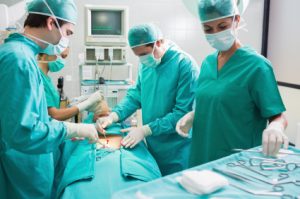
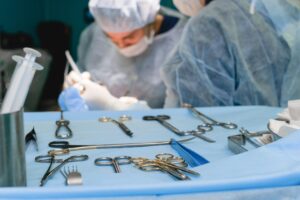
Cadaveric surgical bioskills training is one of the most valuable educational tools in orthopedic foot and ankle surgery because it allows surgeons to practice procedures on human anatomy in a realistic environment without risk to patients. It bridges the gap between classroom learning and live surgery, particularly as new implants, minimally invasive techniques, and technologies are introduced.
Here are the primary ways it benefits foot and ankle surgeons:
1. Improves Surgical Technique
Cadaver labs allow surgeons to:
- Practice complex surgical approaches repeatedly.
- Refine soft tissue handling.
- Learn optimal implant placement.
- Improve fluoroscopic imaging techniques.
- Develop efficiency in procedural steps.
This deliberate practice helps shorten the learning curve before performing procedures on patients.
2. Safely Learn New Procedures
Foot and ankle surgery is evolving rapidly, with techniques such as:
- Minimally invasive bunion correction
- Total ankle replacement
- Arthroscopic ligament reconstruction
- Progressive collapsing foot deformity reconstruction
- Charcot foot reconstruction
Cadaver training provides a low-risk setting to gain experience with these procedures before incorporating them into clinical practice.
3. Enhances Anatomical Understanding
The foot contains:
- 26 bones
- 33 joints
- Numerous tendons, nerves, and blood vessels in a compact space
Hands-on dissection helps surgeons better appreciate:
- Three-dimensional anatomy
- Anatomic variations
- Relationships between neurovascular structures and surgical corridors
- Potential “danger zones” that require careful dissection
4. Supports Adoption of Minimally Invasive Surgery
Minimally invasive foot and ankle procedures rely on limited visualization and fluoroscopic guidance. Cadaver labs help surgeons:
- Master portal placement
- Practice percutaneous techniques
- Understand instrument trajectories
- Reduce the risk of nerve or tendon injury while building familiarity with smaller incisions.
5. Builds Confidence With New Technology
Industry-sponsored and academic bioskills labs often introduce surgeons to:
- New implant systems
- Total ankle replacement platforms
- Arthroscopy equipment
- Weight-bearing fixation systems
- Navigation and patient-specific instrumentation
Surgeons can evaluate these technologies in a practical setting before deciding whether to adopt them.
6. Improves Team Performance
Many labs include the entire operative team, allowing:
- Surgeons
- Surgical assistants
- Residents and fellows
- Industry specialists
to rehearse procedures together. This can improve communication, operating room workflow, and familiarity with instruments.
7. Benefits Surgical Education
Cadaver training is central to residency and fellowship education because it allows trainees to:
- Perform procedures repeatedly.
- Receive immediate faculty feedback.
- Build technical skills before operating on patients.
- Progress from basic exposure techniques to advanced reconstructive procedures.
8. May Improve Patient Outcomes
Although direct evidence linking cadaver training to patient outcomes is challenging to measure, studies across surgical specialties suggest that simulation and cadaver-based training can:
- Reduce technical errors.
- Improve procedural accuracy.
- Increase surgeon confidence.
- Shorten operative times as experience grows.
- Potentially reduce complication rates during the learning phase of new procedures.
Current Trends in Bioskills Training
Modern cadaver programs increasingly incorporate:
- Fresh-frozen specimens that preserve tissue characteristics.
- Preoperative CT or MRI imaging for case planning.
- Arthroscopy and fluoroscopy to simulate operating room conditions.
- Navigation and robotic technologies where available.
- Objective performance assessment using validated technical skills metrics.
- Virtual reality and augmented reality as adjuncts to cadaver practice.
Limitations
Cadaver training has some limitations:
- It cannot replicate bleeding, tissue healing, or patient-specific physiological responses.
- Fresh-frozen specimens require specialized facilities and can be costly.
- Access may be limited, particularly outside academic centers.
- It complements, rather than replaces, supervised clinical experience.
Overall Value
Cadaver surgical bioskills training is widely regarded as the gold standard for developing and maintaining technical proficiency in orthopedic foot and ankle surgery. It enables surgeons to learn new procedures, refine established techniques, understand complex anatomy, and evaluate emerging technologies in a realistic environment before applying those skills in patient care. As foot and ankle surgery becomes increasingly minimally invasive and technology-driven, cadaver-based education remains a cornerstone of surgeon training and continuing professional development.