
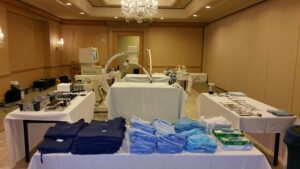
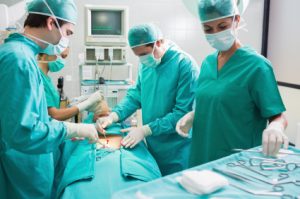
Performing cadaver bioskills training immediately before a live plastic surgery case—often called procedure rehearsal, just-in-time training, or preoperative simulation—can provide significant educational and clinical advantages. It allows surgeons to refresh technical skills, familiarize themselves with new devices or approaches, and rehearse complex anatomy in a realistic environment before operating on a patient.
Some of the key advantages include:
1. Rehearsal of Complex Procedures
Cadaver training allows surgeons to “walk through” every step of a planned operation, including:
- Surgical approach and incision design
- Dissection planes
- Tissue handling
- Flap elevation
- Implant placement
- Closure techniques
This can improve procedural flow and reduce uncertainty during the live case.
2. Refreshing Anatomy
Plastic surgery often requires meticulous work around delicate structures such as:
- Facial nerve branches
- Perforating blood vessels
- Sensory nerves
- Lymphatic channels
- Muscles of facial expression
A cadaver lab provides an opportunity to review these structures in three dimensions immediately before surgery.
3. Practicing Patient-Specific Techniques
For uncommon or technically demanding procedures, surgeons can rehearse:
- Free tissue transfer
- Perforator flap dissection
- Facial reanimation
- Complex rhinoplasty
- Craniofacial reconstruction
- Lymphedema surgery
- Gender-affirming procedures
- Composite tissue reconstruction
This is particularly valuable if the procedure is performed infrequently.
4. Familiarization With New Technology
Cadaver labs allow surgeons to become comfortable with:
- New implant systems
- Energy devices
- Endoscopic equipment
- Microsurgical instruments
- Piezoelectric bone surgery devices
- Surgical navigation systems
Hands-on experience can shorten the learning curve before using these technologies in patients.
5. Improved Operative Efficiency
Rehearsing the procedure can help:
- Streamline the sequence of operative steps
- Reduce unnecessary instrument exchanges
- Improve operating room workflow
- Anticipate technical challenges
Greater efficiency may reduce anesthesia time and improve operating room utilization.
6. Increased Surgeon Confidence
Even experienced surgeons benefit from practicing unfamiliar or rarely performed operations. Cadaver rehearsal can:
- Reinforce muscle memory
- Reduce hesitation during critical steps
- Improve decision-making under operative conditions
- Increase confidence with complex anatomy
7. Enhanced Team Coordination
Many cadaver bioskills sessions include:
- Surgical assistants
- Scrub technicians
- Nurses
- Industry clinical specialists
The team can practice:
- Instrument setup
- Implant preparation
- Positioning
- Communication
- Workflow
This shared rehearsal can improve coordination during the live case.
8. Reduced Technical Errors During the Learning Curve
When adopting a new procedure, cadaver practice allows surgeons to identify potential pitfalls without patient risk, such as:
- Incorrect implant positioning
- Inadequate flap design
- Excessive tissue dissection
- Injury to critical neurovascular structures
By addressing these issues in the lab, surgeons can enter the operating room better prepared.
9. Opportunity to Evaluate Different Techniques
Surgeons can compare approaches side by side, for example:
- Different facelift dissection planes
- Various rhinoplasty grafting methods
- Alternative perforator flap harvest techniques
- Competing fixation systems
This helps refine technique based on firsthand experience.
10. Better Preparedness for Rare or High-Risk Cases
Cadaver rehearsal is especially valuable before:
- Revision aesthetic surgery
- Massive weight loss body contouring
- Complex microsurgical reconstruction
- Craniofacial procedures
- Facial transplantation (training)
- Challenging trauma reconstruction
These operations often involve anatomy or technical demands that benefit from advance practice.
Educational and Clinical Benefits
Although directly measuring patient outcomes is difficult, studies of surgical simulation suggest that preoperative rehearsal can contribute to:
- Greater technical accuracy
- Shorter learning curves
- Improved adherence to procedural steps
- Better team communication
- Increased confidence with new techniques
- Potential reductions in operative time and technical errors, particularly during the adoption of new procedures
Limitations
Cadaver rehearsal has some constraints:
- Cadaver tissue does not fully replicate live tissue characteristics, including bleeding, swelling, and healing.
- It requires access to specialized facilities and specimens.
- It adds time and cost to preoperative preparation.
- It complements rather than replaces supervised clinical experience and sound surgical judgment.
Overall Value
For plastic surgeons, cadaver bioskills training immediately before a live surgical case serves as a high-fidelity rehearsal that can enhance technical precision, refresh anatomical knowledge, improve team coordination, and increase confidence—especially for complex, infrequently performed, or newly adopted procedures. As plastic surgery continues to evolve with new technologies and reconstructive techniques, just-in-time cadaver training is becoming an increasingly valuable strategy for improving surgical preparedness while maintaining patient safety.