Cadaver skills training is one of those things that sounds old-school, but it’s actually irreplaceable—especially for resident surgeons and fellows. The value comes down to realism, safety, and depth of understanding.
First, there’s no substitute for real human anatomy. Textbooks and simulations can teach structure, but cadaver work lets trainees experience the natural variation in bodies—no two people are exactly the same. That matters a lot in fields like Surgery, where small anatomical differences can change how a procedure is performed.
Second, it provides a safe environment to make mistakes. In a cadaver lab, residents can practice complex or high-risk procedures without the pressure of harming a living patient. That’s critical for building both technical skill and decision-making confidence before stepping into the operating room.
Third, it strengthens spatial awareness and tactile skills. Procedures aren’t just visual—they rely heavily on feel. Cadaver training helps develop that hands-on intuition in ways that even advanced simulators struggle to replicate.
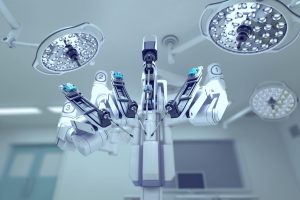
It’s also key for mastering new or evolving techniques. For example, minimally invasive approaches, robotic-assisted procedures, or complex reconstructions often require rehearsal. Practicing on cadavers allows fellows to refine these techniques before applying them clinically.
Another major benefit is team-based training. Surgical care is collaborative, and cadaver labs allow entire teams to rehearse workflows, communication, and coordination in realistic scenarios.
Finally, there’s an ethical dimension. By improving skills in a controlled setting, surgeons reduce the learning curve on actual patients. That directly improves patient safety and outcomes—which is the ultimate goal.
In short, cadaver training bridges the gap between theory and real-life surgery in a way nothing else fully can.