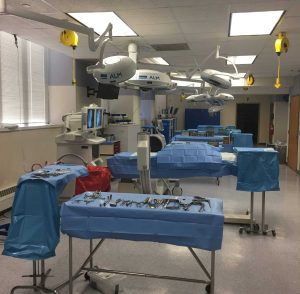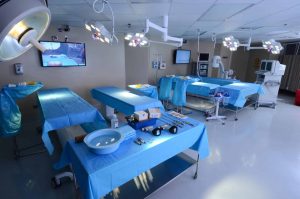
Training military medical personnel on cadavers before real in-field deployment is critically important because battlefield medicine combines extreme injury patterns, hostile environments, and time pressure—conditions that cannot be fully replicated by simulation alone.
Here are the key reasons cadaver training is especially valuable for military medical staff:
1. Exposure to Realistic Combat Injury Patterns
Military clinicians must manage:
-
High-velocity gunshot wounds
-
Blast injuries
-
Complex polytrauma
-
Traumatic amputations
-
Junctional hemorrhage
These injuries distort anatomy in ways that textbooks and mannequins cannot fully simulate. Cadaver training allows providers to:
-
See how real tissue behaves under trauma
-
Understand disrupted anatomical landmarks
-
Practice identifying vital structures in damaged fields
This is crucial for battlefield survival interventions.
2. Development of Life-Saving Procedural Skills
Military medics, corpsmen, and forward surgical teams must perform high-stakes procedures such as:
-
Surgical airways (cricothyrotomy)
-
Chest tube insertion
-
Resuscitative thoracotomy
-
Vascular cutdowns
-
Fasciotomies
Cadavers provide:
-
Realistic tissue resistance
-
Authentic anatomical depth
-
Accurate spatial relationships
Unlike plastic models, cadavers allow trainees to experience the true tactile feedback of human tissue.
Organizations such as the U.S. Department of Defense incorporate cadaver-based training in combat casualty care programs to prepare personnel for deployment.
3. Enhancing Decision-Making Under Stress
Combat medicine often requires:
-
Rapid prioritization
-
Limited equipment
-
Austere conditions
-
Simultaneous casualties
Cadaver labs can be structured as realistic trauma scenarios that:
-
Increase stress exposure
-
Improve procedural flow
-
Build confidence in high-pressure environments
This helps reduce hesitation when seconds determine survival.
4. Bridging the Gap Between Simulation and Reality
High-fidelity mannequins and simulation tools are useful but limited. They cannot replicate:
-
Tissue planes
-
Natural bleeding patterns
-
The feel of fascia, muscle, and vessels
-
Anatomical variability
Cadaver training bridges the gap between classroom instruction and real casualties, ensuring providers are not encountering real human anatomy for the first time in combat.
5. Reducing Preventable Battlefield Deaths
Many potentially survivable combat deaths result from:
-
Uncontrolled hemorrhage
-
Airway compromise
-
Tension pneumothorax
The military’s Tactical Combat Casualty Care (TCCC) doctrine emphasizes rapid intervention. Practicing on cadavers improves:
-
Speed of hemorrhage control
-
Accuracy of airway placement
-
Confidence in invasive life-saving procedures
Better preparedness directly translates to improved survival rates.
6. Preparing for Anatomical Variability
Every soldier is anatomically unique. Cadaver exposure helps military clinicians:
-
Recognize normal variation
-
Adapt when landmarks are obscured
-
Manage unexpected findings
This adaptability is critical in chaotic environments.
7. Psychological Readiness
Working on cadavers helps personnel:
-
Become comfortable operating on real human tissue
-
Reduce emotional shock during first live trauma exposure
-
Develop professional composure
This psychological acclimatization is especially important for medics who may otherwise first encounter severe trauma in combat.
Conclusion
Cadaver training is vital for military medical staff because it:
-
Provides unmatched anatomical realism
-
Builds life-saving technical skill
-
Improves speed and confidence under pressure
-
Reduces preventable combat fatalities
-
Bridges the gap between simulation and battlefield reality
In military medicine—where interventions often occur within minutes of injury—cadaver-based training can make the difference between life and death.