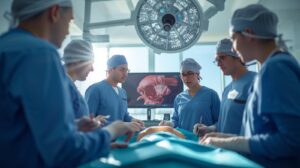
The use of cadavers in neurosurgical training remains one of the most important components in developing safe, skilled, and confident brain and spine surgeons. Despite advances in simulation and virtual reality, cadaver-based training continues to provide irreplaceable educational value.
1. Realistic Anatomical Understanding
Neurosurgery involves operating on highly delicate and complex structures such as:
-
The brain
-
Cranial nerves
-
Major blood vessels
-
The spinal cord
Textbooks and imaging (CT, MRI) provide theoretical knowledge, but cadaver dissection allows trainees to:
-
Visualize three-dimensional relationships
-
Understand anatomical variations
-
Appreciate depth, tissue layers, and spatial orientation
This hands-on exposure builds a deeper and more durable understanding of neuroanatomy.
2. Development of Technical Skills
Neurosurgery demands extreme precision. Cadaver labs allow residents to practice:
-
Craniotomies
-
Skull base approaches
-
Microsurgical techniques
-
Vascular dissection
-
Spinal instrumentation
Unlike live surgery, cadaver training:
-
Removes time pressure
-
Eliminates risk to patients
-
Allows repetition of complex approaches
This repetition is essential for muscle memory and refined motor control.
3. Safe Transition to Live Surgery
Training on cadavers acts as a bridge between theory and operating on real patients. Before performing procedures under supervision, residents can:
-
Practice surgical approaches
-
Identify anatomical landmarks
-
Simulate complications
This reduces surgical errors and improves patient safety.
Organizations such as the American Association of Neurological Surgeons emphasize cadaver-based skills training as a core component of neurosurgical education.
4. Exposure to Anatomical Variability
No two patients are identical. Cadavers expose trainees to:
-
Variations in vascular branching
-
Differences in skull thickness
-
Structural asymmetries
Understanding variability prepares surgeons to adapt intraoperatively rather than relying solely on textbook norms.
5. Complement to Modern Simulation
Technologies like:
-
Virtual reality simulators
-
3D-printed models
-
Augmented reality guidance
are valuable tools. However, they cannot fully replicate:
-
True tissue texture
-
Natural tissue planes
-
Realistic anatomical resistance
Cadavers provide tactile feedback that simulation technology still struggles to match.
6. Ethical and Professional Development
Working with cadavers also instills:
-
Respect for the human body
-
Professional discipline
-
Ethical awareness
Many medical institutions emphasize body donation as a profound educational gift that contributes to improved patient care.
Conclusion
Cadaver use in neurosurgical training is indispensable because it:
-
Enhances anatomical mastery
-
Builds technical competence
-
Improves surgical safety
-
Bridges theory and real-world practice
While modern simulation technologies continue to evolve, cadaver-based training remains the gold standard for preparing neurosurgeons to operate safely on the most complex organ system in the human body.