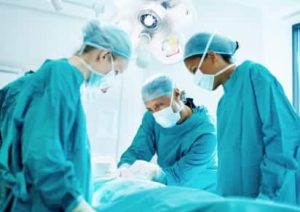
Advancing Hands-On Education in Complex Spine Surgery
Spine surgery is among the most technically demanding areas of orthopedic and neurological surgery. Surgeons must understand complex three-dimensional anatomy while developing the precision required to work around the spinal cord, nerve roots, major blood vessels, vertebral structures, and other critical tissues.
For residents and fellows pursuing careers in spine surgery, textbooks, lectures, imaging, virtual simulation, and operating-room experience are all important components of education. However, opportunities to repeatedly practice complex surgical techniques on human anatomy can be limited.
Cadaver-based spine surgery training provides residents and fellows with a hands-on educational environment where they can study human anatomy, practice surgical approaches, develop technical skills, and receive direct feedback from experienced spine surgeons.
Research examining simulation-based spine education has found that simulation models can provide useful training opportunities and demonstrate learning effects in areas such as procedural performance, implant placement, procedural time, and technical skills. At the same time, researchers emphasize that simulation should complement traditional operating-room training rather than replace it.
Why Cadaver Training Is Important in Spine Surgery
1. Understanding Three-Dimensional Spine Anatomy
Spinal anatomy is complex and highly three-dimensional.
A surgeon must understand not only the vertebrae themselves but also the relationship between:
- The spinal cord
- Nerve roots
- Dura
- Facet joints
- Intervertebral discs
- Ligaments
- Muscles
- Pedicles
- Transverse processes
- Lamina
- Spinous processes
- Major vascular structures
Cadaver specimens allow trainees to physically identify these structures and understand their relationships from multiple surgical perspectives.
This can be particularly valuable when learning approaches where relatively small changes in anatomy or surgical exposure can significantly affect the operative field.
2. Practicing Surgical Approaches Before Performing Them on Patients
One of the principal benefits of a cadaver laboratory is the opportunity for deliberate, hands-on practice.
Under appropriate faculty supervision, residents and fellows can work through surgical approaches and techniques while receiving immediate instruction and feedback.
Depending on the educational objectives, a spine cadaver laboratory may include training related to:
- Cervical spine approaches
- Thoracic spine approaches
- Lumbar spine approaches
- Posterior spinal approaches
- Anterior cervical procedures
- Decompression techniques
- Laminectomy
- Discectomy
- Instrumentation
- Pedicle screw placement
- Spinal fusion techniques
- Minimally invasive spine procedures
- Spinal deformity techniques
- Trauma procedures
- Complex revision approaches
The objective is not simply to observe a procedure. The trainee actively participates in the procedure and can learn how anatomy, instruments, positioning, and surgical technique interact.
3. Developing Technical Skills in a Controlled Environment
Spine surgery requires precise technical execution.
Cadaver training provides a controlled environment where residents and fellows can practice surgical maneuvers without the time pressures and clinical variables present during an actual patient operation.
A structured laboratory can allow trainees to:
- Review the relevant anatomy.
- Plan the surgical approach.
- Position the specimen.
- Perform the surgical exposure.
- Identify critical anatomical structures.
- Practice instrumentation or other techniques.
- Receive feedback from faculty.
- Repeat difficult portions of the procedure.
This type of hands-on learning can complement clinical operative experience by giving trainees additional opportunities to practice techniques that may not be encountered frequently during routine rotations.
A published resident spine surgical skills program reported that participants experienced increased confidence and perceived preparation and safety following cadaveric training.
4. Preparing Residents for Increasingly Complex Spine Procedures
Spine surgery encompasses a broad range of procedures and increasingly specialized techniques.
Residents may be introduced to fundamental spine procedures during residency, while fellows may pursue advanced training in areas such as:
- Adult spinal deformity
- Complex cervical surgery
- Thoracolumbar trauma
- Minimally invasive spine surgery
- Complex reconstruction
- Revision spine surgery
- Instrumentation
- Navigation-assisted procedures
- Advanced decompression techniques
The educational needs of a senior resident and a spine fellow are therefore different.
A well-designed cadaver laboratory can be structured around the learner’s level of experience.
Resident-Level Training
Resident courses can emphasize:
- Fundamental anatomy
- Surgical exposure
- Basic decompression
- Instrumentation principles
- Identification of neural structures
- Basic surgical approaches
- Fundamental procedural techniques
Fellowship-Level Training
Fellowship-level courses can progress to:
- Complex approaches
- Advanced instrumentation
- Deformity techniques
- Revision surgery
- Minimally invasive techniques
- Complex cervical procedures
- Advanced thoracolumbar procedures
- Complication avoidance
- Challenging anatomical exposures
This progressive approach mirrors the broader concept of competency-based surgical education.
AO Spine, for example, describes its curriculum around the development of competencies and entrustable professional activities, with education progressing toward the ability to perform clinical activities independently.
5. Cadaver Training and Minimally Invasive Spine Surgery
Minimally invasive spine surgery presents its own educational challenges.
The surgeon must work through relatively limited operative corridors while maintaining awareness of surrounding anatomy and using specialized instruments and visualization technologies.
For trainees, practicing these techniques on human anatomical specimens can provide an opportunity to understand:
- Surgical corridors
- Instrument positioning
- Anatomical landmarks
- Tissue relationships
- Visualization limitations
- Working angles
- Procedural sequencing
AO Spine currently includes hands-on human anatomical specimen training within its educational programs for advanced minimally invasive spine surgery. Its MISS curriculum specifically identifies fellows and senior residents pursuing spine surgery among its target learners.
This illustrates the continued role of hands-on anatomical training within modern spine education.
6. Learning From Technical Challenges Before Patient Care
A cadaver laboratory allows trainees to encounter technical challenges in an educational environment.
For example, a trainee may discover that a particular surgical exposure provides limited visualization or that an anatomical structure makes an intended approach more difficult than expected.
Instead of simply moving on, the trainee can stop, discuss the problem with faculty, and explore alternative approaches.
Faculty can ask questions such as:
- What anatomical landmark should be identified first?
- Where is the nerve root relative to the planned approach?
- How can exposure be improved?
- What structures must be protected?
- What alternative approach could provide better visualization?
- How should instrumentation be positioned?
- What complications could result from incorrect technique?
These discussions can help connect anatomical knowledge with operative decision-making.
7. Faculty Feedback Is a Critical Part of Cadaver Training
The value of a cadaver laboratory extends beyond the specimen itself.
Experienced spine surgeons can provide immediate instruction and feedback while trainees perform procedures.
Faculty may demonstrate a technique and then allow the resident or fellow to perform it themselves.
This creates a learning cycle:
Demonstration → Practice → Feedback → Correction → Repetition
A systematic review of simulation-based spine education identified technical performance measures and learning effects across multiple simulation approaches.
A separate neurosurgical residency program that developed a multi-part spine simulation curriculum reported strong resident evaluations of hands-on spine simulation courses involving human cadaveric and 3D model-based training.
8. Cadaver Training Can Complement Operating-Room Experience
Cadaver training should not be viewed as a replacement for clinical surgical education.
Actual patient care teaches dimensions of surgery that cannot be fully reproduced in a laboratory, including:
- Patient selection
- Clinical decision-making
- Imaging interpretation
- Anesthesia considerations
- Intraoperative communication
- Real-time clinical judgment
- Postoperative management
- Management of complications
- Longitudinal patient care
Instead, cadaveric simulation provides another educational environment where technical skills and anatomy can be practiced.
The systematic review of spine-surgery simulation concluded that traditional in-person operating-room training remains pivotal while simulation can serve as a complementary training method.
9. Supporting Competency-Based Spine Education
Modern surgical education increasingly emphasizes demonstrating competency rather than simply completing a certain number of cases.
A competency-based approach asks whether a trainee can appropriately perform the knowledge and technical skills required for a particular activity.
Cadaver laboratories can be incorporated into this model by establishing specific learning objectives and measurable skills.
For example, a spine program could evaluate whether a trainee can:
- Identify relevant anatomical structures.
- Select an appropriate surgical approach.
- Demonstrate correct surgical exposure.
- Perform a defined technical maneuver.
- Identify potential anatomical hazards.
- Explain the rationale behind a procedural step.
- Demonstrate appropriate instrumentation technique.
AO Spine’s current educational framework emphasizes competency development and progressive acquisition of the skills required for independent clinical practice.
10. Why Cadaver Training Is Valuable for Spine Fellowships
Spine fellowship training represents an important transition from general surgical training toward advanced subspecialty practice.
Fellows may already possess substantial operative experience, but they are expected to develop additional expertise in complex spine procedures.
A fellowship cadaver laboratory can provide an environment for advanced training in areas such as:
Complex Cervical Surgery
Advanced anatomical approaches and techniques involving the cervical spine and surrounding neural structures.
Adult Deformity
Three-dimensional understanding of spinal alignment, instrumentation, osteotomies, and complex reconstruction concepts.
Minimally Invasive Spine Surgery
Advanced approaches using specialized instrumentation and visualization techniques.
Trauma
Hands-on study of complex spinal injuries and stabilization techniques.
Revision Surgery
Understanding altered anatomy and challenging surgical exposures.
Advanced Instrumentation
Practice with instrumentation techniques and anatomical considerations.
AO Spine’s current educational offerings include advanced courses in spinal trauma, deformity, and minimally invasive spine surgery, reflecting the continuing demand for hands-on competency development in these areas.
Designing an Effective Spine Cadaver Laboratory
The most effective cadaver courses begin with clearly defined educational objectives.
Before the laboratory begins, program directors and faculty should identify:
What should the trainee be able to do at the end of the course?
Which anatomical structures should be identified?
Which procedures should be practiced?
What level of trainee is participating?
What equipment and instrumentation are required?
How will performance and learning be evaluated?
A well-planned program can then combine:
- Pre-course educational material
- Lectures
- Case discussions
- Anatomical demonstrations
- Hands-on cadaver dissection
- Surgical technique practice
- Faculty instruction
- Technical feedback
- Post-course assessment
This structured approach transforms a cadaver laboratory from a simple anatomy exercise into a comprehensive surgical education experience.
Selecting a Cadaver Training Provider
Organizing a spine cadaver laboratory involves considerably more than obtaining specimens.
Residency programs, fellowship programs, hospitals, universities, medical device companies, and professional surgical organizations may need assistance coordinating:
- Human cadaver specimens
- Specimen specifications
- Transportation
- Refrigerated delivery
- Storage and handling
- Cadaver tissue stewards
- Laboratory logistics
- Surgical equipment
- PPE
- Specimen removal
- Final disposition
- Multi-location training requirements
A qualified training-support provider can help coordinate these logistical elements so faculty can concentrate on the educational objectives and trainee experience.
The Future of Spine Surgical Education
As spine surgery becomes increasingly specialized, surgical education must continue to evolve.
Simulation and cadaver-based education can provide residents and fellows with additional opportunities to develop technical skills before and alongside clinical operative experience.
Current spine education organizations continue to incorporate hands-on anatomical specimen training into competency-based programs, including training in minimally invasive spine surgery, trauma, deformity, and advanced techniques.
For residents, cadaver training can provide an opportunity to develop fundamental surgical skills and anatomical understanding.
For fellows, it can provide a platform for advanced techniques and complex procedures.
For faculty, it provides an environment for structured teaching, demonstration, feedback, and assessment.
Building Better Spine Surgeons Through Hands-On Education
The ultimate goal of surgical education is to develop surgeons who possess the knowledge, technical skills, judgment, and experience required to provide appropriate patient care.
Cadaver training is one component of that process.
By allowing residents and fellows to work directly with human anatomy, practice surgical approaches, receive expert feedback, and explore complex techniques in a controlled educational setting, cadaver-based training can complement the clinical experience gained in residency and fellowship programs.
For spine surgery programs looking to strengthen hands-on education, a well-designed cadaver laboratory can be a valuable addition to the curriculum.
Cadaver Training Support for Spine Surgery Education
Surgical & Medical Training Services LLC (SMTS) provides human cadaver specimens and related training support for medical, surgical, educational, military, government, and professional training programs.
SMTS can support spine surgery training programs with:
- Human cadaver specimens
- Cadaver transportation
- Refrigerated delivery
- Tissue stewardship
- Storage and handling
- Training-laboratory logistics
- PPE and related supplies
- Specimen removal and final disposition
- Support for multi-site training programs
Whether the program is developing a resident spine skills laboratory, an advanced spine fellowship course, a surgical skills workshop, or a professional medical education event, appropriate specimen coordination and logistics are important components of a successful training program.
To discuss cadaver-based spine surgery training requirements, contact Surgical & Medical Training Services LLC.
Phone: 888-801-9444
Email: [email protected]
Website: smts-1.com