Bridging the Gap Between Surgical Knowledge and Operative Experience
Orthopedic surgery is one of the most technically demanding specialties in medicine. Residents must develop an in-depth understanding of human anatomy while simultaneously learning how to perform complex surgical procedures, use specialized instruments, and make precise decisions in the operating room.
Traditional clinical experience remains an essential part of orthopedic residency. However, residents may have limited opportunities to repeatedly perform certain procedures or explore complex anatomy in a controlled educational environment.
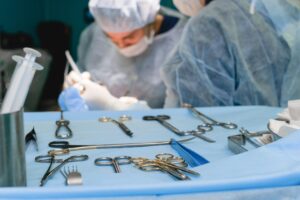
Cadaver-based surgical training provides an important bridge between learning surgical concepts and applying those concepts in the operating room.
Through hands-on cadaver laboratory training, orthopedic residents can study realistic human anatomy, practice surgical approaches, develop technical skills, and receive direct feedback from experienced faculty in an environment specifically designed for education.
Why Cadaver Training Matters in Orthopedic Residency
1. Realistic Surgical Anatomy
Anatomy textbooks, digital models, videos, and synthetic simulators are valuable educational tools. However, they cannot completely reproduce the complexity and variability of human anatomy.
Cadaver specimens allow residents to directly identify:
- Muscles, tendons, ligaments, nerves, and blood vessels
- Surgical planes and anatomical landmarks
- Joint structures and surrounding tissues
- Relationships between anatomical structures
- Variations in individual anatomy
- Surgical exposure and tissue relationships
This three-dimensional experience can help residents develop a deeper understanding of the anatomy they encounter during actual procedures.
Research involving orthopedic residents has found cadaveric laboratory education beneficial for understanding normal surgical anatomy and specific surgical techniques.
2. Practicing Surgical Techniques Before Treating Patients
One of the greatest advantages of cadaver training is the opportunity to practice.
Residents can work through surgical approaches and techniques repeatedly without placing a patient at risk. Under faculty supervision, they can learn where to make an incision, how to expose an anatomical structure, how to position instruments, and how to navigate difficult surgical anatomy.
Cadaveric simulation studies involving orthopedic residents have reported improvements in operative confidence and technical learning. One study found that cadaveric simulation provided educational value beyond lower-fidelity simulation and gave residents opportunities to perform procedures in their entirety while receiving real-time feedback from subspecialty faculty.
This type of deliberate practice can be especially valuable for procedures that residents may encounter relatively infrequently during clinical rotations.
3. Developing Surgical Confidence
Confidence in surgery should never replace competence, supervision, or appropriate clinical judgment. However, familiarity with a procedure can help residents approach an operation with a better understanding of the steps involved.
Cadaver laboratory training gives residents the opportunity to:
- Review the relevant anatomy.
- Plan the surgical approach.
- Perform the procedure.
- Identify technical challenges.
- Receive feedback from faculty.
- Repeat portions of the procedure.
- Discuss alternative approaches.
A longitudinal cadaver-based simulation program reported sustained improvements in residents’ knowledge of anatomy, technical dissection skills, and confidence performing operative skills independently.
4. Learning Complex Orthopedic Procedures
Orthopedic surgery encompasses a wide range of procedures involving the shoulder, elbow, wrist, hand, spine, hip, knee, ankle, and foot.
Cadaver laboratories can be structured around specific learning objectives and subspecialties.
For example, orthopedic resident cadaver courses may incorporate:
Shoulder
- Arthroscopic portal placement
- Rotator cuff procedures
- Labral procedures
- Shoulder arthroplasty approaches
Knee
- ACL reconstruction
- Meniscal procedures
- Arthroscopy
- Total knee arthroplasty approaches
Hip
- Surgical approaches
- Total hip arthroplasty
- Revision concepts
- Anatomical exposure
Hand and Wrist
- Tendon repair
- Fracture approaches
- Carpal tunnel and related anatomy
- Complex soft-tissue exposure
Foot and Ankle
- Osteotomies
- Tendon procedures
- Arthroscopy
- Surgical approaches to fractures and deformities
Published research has demonstrated that cadaveric arthroscopy training can improve resident performance across multiple joints, with particularly notable gains in procedures that junior residents may encounter less frequently during routine clinical training.
5. Supporting Deliberate Practice
The concept of deliberate practice is particularly relevant to surgical education.
Instead of simply observing a procedure, residents can actively perform the procedure, receive feedback, identify deficiencies, and repeat the technique.
A study of cadaveric hand-surgery simulation involving orthopedic residents found that resident-directed deliberate practice combined with intensive faculty feedback produced rapid self-reported gains in confidence and was perceived by participants as highly transferable to clinical practice.
The educational value of this approach comes from making the resident an active participant rather than a passive observer.
6. Learning From Mistakes in a Controlled Environment
Surgical education requires residents to learn from technical errors and difficult situations.
A cadaver laboratory provides an environment where a resident can encounter an anatomical or technical challenge, stop, discuss the problem with faculty, and try another approach.
This can allow residents to explore questions such as:
- What happens if the surgical approach is extended?
- Where is the relevant nerve located?
- How can exposure be improved?
- What anatomical structures need to be protected?
- How does changing positioning affect access?
- What alternative surgical approach could be considered?
The objective is not to replace supervised clinical training. Rather, cadaveric simulation can complement it by providing additional opportunities for structured practice.
7. Faculty Feedback Makes the Experience More Valuable
The specimen itself is only one part of an effective cadaver training program.
Experienced orthopedic faculty can transform a cadaver laboratory into an interactive educational experience by providing:
- Step-by-step instruction
- Real-time feedback
- Demonstrations
- Surgical tips and techniques
- Discussion of alternative approaches
- Correction of technical errors
- Subspecialty expertise
- Opportunities for residents to repeat difficult portions of a procedure
Research involving orthopedic residents has specifically identified intensive supervision and real-time feedback from subspecialty attending surgeons as highly valued components of cadaveric simulation.
8. Cadaver Training Complements, Rather Than Replaces, Clinical Training
Cadaver laboratory training should be viewed as one component of a comprehensive orthopedic residency curriculum.
It does not replace:
- Operating-room experience
- Patient care
- Clinical decision-making
- Supervised procedures
- Preoperative planning
- Postoperative management
- Emergency care
- Professional communication
Instead, it can complement these experiences by giving residents an additional environment in which to study anatomy and practice technical skills.
The American Academy of Orthopaedic Surgeons continues to incorporate hands-on cadaver laboratories into resident education, including courses covering arthroscopy and hip and knee arthroplasty.
Designing an Effective Orthopedic Cadaver Training Program
A successful cadaver training program should begin with clearly defined educational objectives.
Before the laboratory begins, program directors and faculty can determine:
What procedures should residents learn?
What anatomical structures should they identify?
What technical skills should they demonstrate?
What level of resident should participate?
What instruments and equipment are required?
How will resident performance be evaluated?
A structured curriculum can then combine lectures, surgical demonstrations, hands-on dissection, deliberate practice, faculty feedback, and post-laboratory assessment.
This approach allows the cadaver specimen to become part of a broader educational program rather than simply an isolated laboratory exercise.
Choosing the Right Cadaver Training Partner
For residency programs, medical schools, hospitals, and orthopedic education organizations, obtaining appropriate specimens and coordinating logistics can be a significant undertaking.
A cadaver training provider may support the program by coordinating:
- Whole-body cadaver specimens
- Anatomical specimen specifications
- Transportation and refrigerated delivery
- Storage and handling
- Cadaver tissue stewards
- Laboratory logistics
- Equipment and supplies
- PPE
- Specimen removal
- Final disposition
- Multi-site training requirements
Selecting a provider with experience supporting surgical education can allow faculty and residency programs to concentrate on the educational objectives of the course.
The Future of Orthopedic Surgical Education
Orthopedic surgical education continues to incorporate increasingly sophisticated simulation and hands-on learning.
Cadaver laboratories occupy a unique position because they allow residents to work with realistic human anatomy while practicing surgical techniques under controlled conditions.
Recent research continues to support cadaveric simulation as a useful component of orthopedic education, while also highlighting the importance of structured practice, faculty feedback, and opportunities for repeated training.
As residency programs continue to emphasize competency-based education, cadaver training can provide another mechanism for residents to develop and demonstrate technical skills before and alongside clinical operative experience.
Supporting the Next Generation of Orthopedic Surgeons
The ultimate objective of surgical education is to help residents develop the knowledge, technical abilities, judgment, and professionalism required to provide safe and effective patient care.
Cadaver training contributes to that educational process by giving orthopedic residents an opportunity to study real human anatomy, practice surgical techniques, work through complex approaches, receive expert feedback, and build familiarity with procedures in a controlled learning environment.
For orthopedic residency programs seeking to strengthen hands-on surgical education, a well-designed cadaver laboratory can be a valuable component of a comprehensive training curriculum.
About Surgical & Medical Training Services LLC
Surgical & Medical Training Services LLC (SMTS) provides human cadaver specimens and related training support for medical, surgical, military, government, educational, and professional training programs.
SMTS can support training programs with cadaver specimen coordination, transportation, refrigerated delivery, tissue stewardship, storage and handling, laboratory logistics, and related services.
To discuss cadaver-based training requirements for an orthopedic residency program, surgical skills laboratory, medical education course, or professional training event, contact Surgical & Medical Training Services LLC.
Phone: 888-801-9444
Email: [email protected]
Website: smts-1.com
Sources and further reading
- Cadaveric simulation and orthopedic resident learning:
- Longitudinal cadaver-based surgical simulation:
- Cadaveric hand-surgery simulation and deliberate practice:
- Cadaveric arthroscopic training for orthopedic residents:
- AAOS resident cadaver-based arthroplasty education: