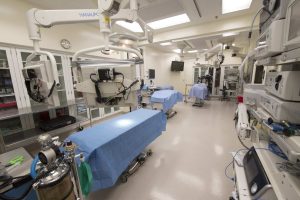
The U.S. military places a high value on realistic medical training because deployed medical personnel may have to treat catastrophic injuries under extreme conditions, often with little time or limited resources. Human cadavers have traditionally been one component of that training because they provide anatomical realism that is difficult to fully replicate with other methods.
Some of the main reasons include:
- Realistic human anatomy: Cadavers allow trainees to see and feel the true relationships between muscles, blood vessels, nerves, bones, and organs. Human anatomy varies from person to person, and cadavers expose trainees to those natural differences.
- Training for rare, high-risk procedures: Combat injuries can require procedures that civilian providers may perform infrequently, such as emergency surgical airways, hemorrhage control in difficult anatomical locations, thoracotomies, amputations, or vascular exposure. Cadavers let clinicians practice these techniques before performing them on living patients.
- Developing tactile skills: Many lifesaving procedures rely on touch as much as vision. Learning how tissues feel, how much force to apply, and how anatomical structures move cannot be fully replicated with books or many simulators.
- Preparing for severe trauma: Military casualties may have complex injuries involving blast effects, gunshot wounds, burns, crush injuries, or multiple simultaneous injuries. Cadaver-based training helps teams rehearse the surgical approaches and decision-making required in these situations.
- Building team coordination: Military medical care is delivered by teams. Cadaver labs allow surgeons, anesthesiologists, nurses, medics, physician assistants, and technicians to practice communication, role coordination, and procedural workflows in realistic scenarios.
- Reducing errors under pressure: Repetition in a realistic setting can improve familiarity with procedures, helping clinicians perform more efficiently and confidently during high-stress situations where delays or mistakes can have serious consequences.
That said, cadavers are no longer the only—or even always the primary—training tool. The military increasingly uses a combination of:
- High-fidelity patient simulators that can breathe, bleed, and respond physiologically.
- Virtual reality and augmented reality systems for procedural rehearsal.
- Three-dimensional printed anatomical models for specific skills.
- Animal-free synthetic tissue models designed to mimic human anatomy.
- Team-based simulation exercises in mock combat environments.
These methods are often combined with cadaver training because each has strengths. Simulators can recreate changing vital signs and allow repeated practice, while cadavers provide unmatched anatomical realism.
It’s also worth noting that cadaver training is conducted under strict ethical and legal standards. Individuals who donate their bodies do so voluntarily through anatomical donation programs, and military and civilian training institutions are expected to treat donated remains with dignity and respect. Many programs hold memorial ceremonies to honor donors and acknowledge the contribution they make to improving medical care.
The overarching goal is straightforward: to prepare military medical personnel as thoroughly as possible so they can provide effective, lifesaving care in some of the most challenging environments they may encounter.