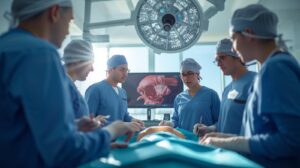
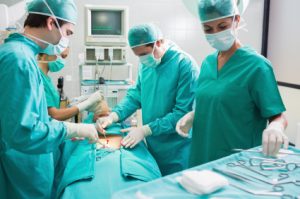
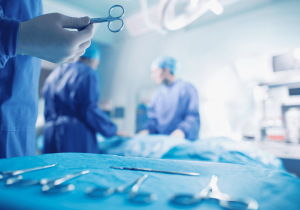
Advancements in orthopedic surgery are happening quickly—but many of the most cutting-edge techniques still depend heavily on hands-on, high-fidelity training, which is where cadaver labs remain uniquely valuable. Cadaver-based training bridges the gap between theory, simulation, and real surgery by providing realistic anatomy, tissue behavior, and procedural context .
Here are some key orthopedic advancements that are especially enhanced by cadaver skills training:
1. Minimally invasive and arthroscopic surgery
Procedures like knee and shoulder arthroscopy have become standard, using small incisions and cameras.
- Cadaver training allows surgeons to:
- Practice instrument navigation in tight joint spaces
- Identify anatomical landmarks and variations
- Improve speed and precision
Studies show cadaver labs significantly improve arthroscopic skills, including structure identification and procedural efficiency .
2. Joint replacement (arthroplasty) innovations
Modern hip and knee replacements now involve:
- Patient-specific implants
- Robotic-assisted placement
- Muscle-sparing approaches
Cadavers help surgeons:
- Refine implant positioning and alignment
- Practice new surgical approaches safely
- Understand biomechanical relationships in real tissue
These procedures are commonly practiced in cadaver labs before clinical use .
3. Computer-assisted and robotic surgery
Technologies like navigation systems and robotics improve precision, but they require new technical skills.
- Cadaver labs allow:
- Integration of navigation tools with real anatomy
- Testing accuracy of bone cuts and implant placement
- Practicing workflows without patient risk
They also help validate emerging systems like AI-guided navigation and 3D visualization tools.
4. Advanced fracture fixation techniques
Modern trauma care uses:
- Locking plates
- Intramedullary nails
- Minimally invasive fixation strategies
Cadaver training enables:
- Realistic drilling, plating, and screw placement
- Understanding bone density and resistance (tactile feedback)
- Practicing complex fracture patterns (e.g., pelvis, acetabulum)
5. Spine surgery advancements
Spinal procedures (e.g., laminectomy, fusion) are increasingly precise and high-risk.
- Cadaver labs are critical for:
- Learning safe drilling near the spinal cord
- Practicing new navigation-guided techniques
- Understanding 3D spinal anatomy
This is especially important given the narrow margin for error.
6. Soft tissue and ligament reconstruction (sports medicine)
Procedures like ACL reconstruction and rotator cuff repair are evolving with:
- New graft materials
- Biologic augmentation
- Improved fixation devices
Cadaver training allows surgeons to:
- Practice graft placement and tensioning
- Explore different surgical techniques
- Understand tissue handling and healing considerations
7. Personalized and 3D-planned surgery
With advances in imaging and 3D modeling:
- Surgeons can plan patient-specific procedures
Cadavers enhance this by:
- Allowing rehearsal of planned surgeries
- Validating implant fit and positioning
- Bridging digital planning with real anatomy
8. Hybrid simulation (cadaver + VR/AR)
Modern training increasingly combines:
- Virtual reality (VR)
- Augmented reality (AR)
- Cadaver labs
Cadavers provide the gold-standard realism, while simulation adds repetition and metrics. Together, they improve skill acquisition and confidence before operating on patients .
Why cadaver training still matters
Even with advanced simulation, cadavers remain essential because they provide:
- True anatomical variability
- Realistic tissue feel (critical in orthopedics)
- Full procedural practice from incision to closure
They effectively accelerate the learning curve while reducing patient risk .
Bottom line
Many of the most important orthopedic innovations—especially minimally invasive techniques, robotics, and complex reconstructions—depend on cadaver-based training to be safely adopted. It’s not just about learning anatomy; it’s about mastering the feel, variability, and complexity of real human surgery.