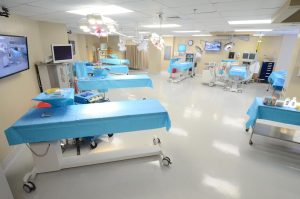
Cadaver lab training can be particularly valuable for EMTs and paramedics because it connects textbook anatomy and simulation with the actual three-dimensional structures they encounter when treating trauma and critically ill patients.
Key ways it can improve EMS skills
- Better understanding of anatomy: Working with human specimens helps providers visualize the exact location and relationships of the airway, lungs, heart, major blood vessels, nerves, bones, and abdominal organs.
- Improved airway skills: Cadaver labs can help providers understand airway anatomy and practice techniques such as airway positioning, supraglottic airway placement, intubation, and surgical-airway concepts in a realistic anatomical environment.
- Stronger trauma assessment: Seeing actual anatomical structures can make it easier to understand what injuries may occur from penetrating or blunt trauma and what internal structures could be damaged.
- More effective procedural skills: Depending on the course and scope of practice, providers may practice procedures such as vascular access, intraosseous access, chest decompression, chest tube techniques, hemorrhage-control approaches, or other advanced procedures under appropriate medical supervision.
- Understanding complications: A major benefit is seeing what is underneath the surface. Providers can better appreciate why needle or catheter placement must follow specific anatomical landmarks and what structures could potentially be injured.
- Better clinical decision-making: Connecting external signs with underlying anatomy can improve recognition of life-threatening conditions and help providers understand why particular interventions are indicated.
- Greater confidence under pressure: Repeated hands-on practice in a controlled environment allows providers to become more familiar with equipment, landmarks, positioning, and procedural sequences before encountering them during an emergency.
- Improved communication with receiving teams: A stronger understanding of anatomy can help paramedics communicate more precisely about suspected injuries, procedures performed, and patient findings to emergency physicians and trauma teams.
Why cadavers add something different from simulation
Manikins are excellent for practicing teamwork, algorithms, communication, and physiologic scenarios. Cadaver labs provide something different: real human anatomy and tissue relationships.
For example, a paramedic may know from a textbook where a structure should be located. Working with a cadaver demonstrates how that structure relates to surrounding tissues in three dimensions and how anatomical variation can affect a procedure.
The ideal training model is therefore:
Classroom anatomy → simulation/manikin practice → cadaver lab → supervised clinical application → ongoing skills assessment.
One important caveat is that cadavers do not reproduce living physiology—there is no active bleeding, spontaneous respiration, pulse, blood pressure, or patient response. Consequently, cadaver training works best as a supplement to high-fidelity simulation and real-world supervised EMS experience, rather than as a replacement.
For an EMT/paramedic program, a well-designed cadaver course can therefore serve as a powerful anatomy-to-action bridge, helping providers understand not just what procedure to perform, but why the anatomy makes the procedure work and what can go wrong.