Turnkey Cadaver & Surgical Training Labs at Hotels, Conference Centers & Medical Conferences
Bring Professional Hands-On Surgical Training Directly to Your Conference or Meeting
Medical education doesn’t always have to take place inside a traditional anatomy laboratory.
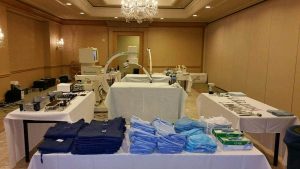
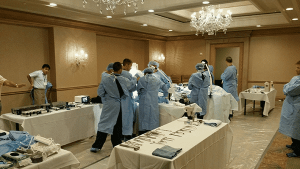
Surgical & Medical Training Services LLC (SMTS) provides the capability to bring a professional, organized, and fully coordinated cadaver-based surgical training laboratory directly to conference centers, hotels, meeting facilities, hotel ballrooms, educational venues, and other suitable locations.
For medical device companies, orthopedic implant companies, surgical technology companies, medical associations, surgical societies, hospitals, universities, and professional medical conferences, SMTS can help transform an appropriate meeting space into a hands-on surgical education and training environment.
Our goal is simple:
Bring the cadaver laboratory to your event.
SMTS can coordinate the human cadaver specimens, surgical and medical equipment, laboratory technicians, PPE, transportation, setup, training-day logistics, specimen handling, and related services necessary to support a professional hands-on educational experience.
A Mobile Cadaver Lab for Your Next Medical Conference
Many medical organizations want to provide physicians with meaningful hands-on education during their conferences and meetings.
However, traditional cadaver laboratories may not be located near the conference venue.
SMTS can help bridge that gap.
Our mobile cadaver training capability allows organizations to incorporate hands-on human anatomical education into events held at:
- Conference centers
- Hotels
- Hotel ballrooms
- Meeting rooms
- Convention facilities
- Medical association conferences
- Surgical society meetings
- Corporate training events
- Medical device education events
- Surgical implant training programs
- Physician education programs
- Hospital educational facilities
- University facilities
- Other appropriate training venues
Subject to applicable facility, regulatory, health, safety, and local requirements, SMTS can coordinate the resources necessary to establish a professional temporary surgical training laboratory at the selected location.
Medical Device Companies: Bring Hands-On Training to Your Customers
Medical device companies increasingly rely on hands-on education to help physicians understand new technologies, instruments, implants, and surgical procedures.
A presentation or product demonstration can explain how a device works.
A cadaver laboratory can provide an opportunity for surgeons to interact with the device and human anatomy in a hands-on educational environment.
SMTS can support medical device companies developing:
- New product training
- Surgeon education
- Product demonstrations
- Instrument training
- Implant education
- Surgical technique workshops
- Physician training events
- Hands-on product education
- Product launch events
- Regional surgeon meetings
- National sales meetings
- Distributor education
- Continuing medical education events
SMTS can work with your organization and training faculty to coordinate the cadaver and laboratory requirements for your event.
Surgical Implant Companies
Orthopedic and surgical implant companies may require specialized environments where surgeons can become familiar with implants, instrumentation, surgical approaches, and procedural techniques.
SMTS can support hands-on educational programs involving areas such as:
- Orthopedic implants
- Foot and ankle implants
- Spine implants
- Trauma implants
- Joint reconstruction
- Sports medicine
- Surgical instrumentation
- Arthroscopy
- Surgical navigation
- Other surgical technologies
The training environment can be structured around the specific objectives of the program, the anatomical specimens required, the equipment being demonstrated, and the number of participating surgeons.
Medical Associations and Surgical Societies
Professional medical associations and surgical societies can incorporate hands-on cadaver education into their annual meetings, regional conferences, workshops, and specialty training programs.
A conference does not have to be limited to lectures, presentations, posters, and exhibits.
Organizations can add a hands-on surgical laboratory experience to their educational program.
Potential applications include:
- Annual medical conferences
- Surgical society meetings
- Specialty workshops
- Physician continuing education
- Resident education
- Fellowship education
- Surgical skills courses
- Pre-conference workshops
- Post-conference workshops
- Advanced surgical technique courses
- Cadaver dissection courses
- Hands-on device training
SMTS can work with conference organizers to coordinate the cadaver laboratory component of the event.
What SMTS Can Provide
A successful temporary cadaver laboratory requires much more than a human specimen.
SMTS can coordinate multiple components of the training environment.
Human Cadaver Specimens
SMTS can coordinate human cadaver specimens appropriate for the planned educational program and anatomical objectives.
Specimen requirements can be discussed during the planning process based on:
- Specialty
- Procedures being taught
- Number of participants
- Number of stations
- Course duration
- Anatomical requirements
- Training objectives
Cadaver Laboratory Technicians
SMTS can provide cadaver and surgical laboratory technicians to support the training environment.
Technicians can assist with appropriate laboratory logistics, specimen preparation, handling, station setup, and coordination during the training event.
This allows the physicians and instructors to focus on education and surgical technique rather than managing the operational details of the cadaver laboratory.
Surgical & Medical Equipment
Depending on the requirements of the program, SMTS can coordinate surgical and medical equipment necessary to support hands-on training.
Equipment requirements should be identified during the planning phase so the training environment can be properly configured for the specific course.
Personal Protective Equipment
SMTS can provide PPE and related laboratory supplies appropriate to the training environment.
Potential PPE requirements may include:
- Gloves
- Protective gowns
- Face protection
- Masks
- Protective eyewear
- Other appropriate protective equipment
The exact PPE requirements should be established according to the training procedures, venue requirements, applicable safety requirements, and the organization’s protocols.
Professional, Clean and Organized Training Environment
When a medical organization brings physicians together for a training program, the training environment matters.
SMTS understands that a conference-based cadaver laboratory needs to be professional, organized, clean, and carefully coordinated.
Our goal is to help create a training environment that allows physicians and instructors to focus on education.
The laboratory planning process can include coordination of:
- Training stations
- Cadaver specimens
- Surgical equipment
- Instrumentation
- PPE
- Laboratory supplies
- Specimen transportation
- Delivery and pickup
- Room setup
- Station organization
- Technician support
- Training-day logistics
- Cleanup
- Specimen recovery
- Final disposition
This approach allows the conference organizer or medical device company to work with one coordinated cadaver-service provider rather than managing multiple vendors independently.
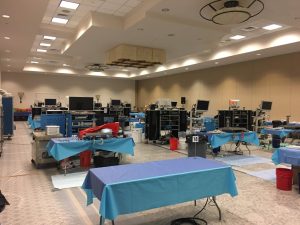
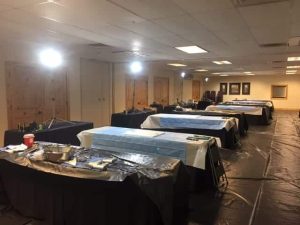
Turn a Hotel Ballroom Into a Surgical Training Laboratory
A hotel ballroom or conference room may not look like a surgical laboratory when an event begins.
With appropriate planning, however, a suitable venue can be configured for a temporary hands-on educational environment.
SMTS can work with event organizers, venue management, medical device companies, and course faculty to determine the logistical requirements for the planned training.
Potential planning considerations include:
Space
Adequate room must be available for:
- Training stations
- Cadaver tables
- Surgical equipment
- Participant movement
- Faculty
- Technicians
- Supplies
- PPE
- Refrigerated equipment when required
Venue Coordination
Advance coordination may be required with the hotel or conference facility regarding:
- Room access
- Loading and unloading
- Delivery schedules
- Electrical requirements
- Water and drainage requirements where applicable
- Waste handling
- Refrigeration
- Security
- Cleaning
- Room access times
- Local facility policies
Cadaver Logistics
The cadaver component may require coordination of:
- Transportation
- Appropriate handling
- Delivery
- Storage
- Training schedule
- Specimen recovery
- Final disposition
These requirements should be planned well in advance of the conference or meeting.
A Complete Cadaver Training Solution
SMTS can help organizations coordinate the entire cadaver training component of an event.
Planning
Course objectives → Specimen requirements → Equipment → Venue → Schedule
Preparation
Cadaver procurement → Transportation → Equipment → PPE → Laboratory setup
Training
Cadaver stations → Surgical equipment → Technicians → Faculty → Physician education
Completion
Specimen recovery → Cleanup → Transportation → Final disposition
This coordinated approach can make it easier for medical organizations and companies to incorporate hands-on surgical education into their existing events.
Who Can Benefit From a Mobile Cadaver Training Lab?
SMTS can support a wide range of organizations seeking hands-on medical and surgical education.
Medical Device Companies
For physician and surgeon product education.
Surgical Implant Companies
For hands-on implant and instrumentation training.
Orthopedic Companies
For orthopedic surgical education and procedural workshops.
Medical Associations
For annual meetings, specialty conferences, and educational programs.
Surgical Societies
For hands-on surgical courses and advanced training.
Hospitals
For physician, resident, fellow, and surgical staff education.
Universities and Medical Schools
For anatomy and surgical education programs.
Physician Training Organizations
For hands-on professional education and skills development.
Medical Conferences
For pre-conference, post-conference, and dedicated hands-on laboratory programs.
Why Use a Mobile Cadaver Laboratory?
A traditional cadaver laboratory requires physicians to travel to the laboratory.
A mobile or venue-based cadaver laboratory offers another option:
Bring the training to the physicians.
This can allow organizations to integrate hands-on education into an existing:
- Annual meeting
- Medical conference
- Sales meeting
- Product launch
- Surgeon education event
- Continuing education program
- Surgical workshop
- Regional training event
Instead of organizing a separate trip to a distant anatomy laboratory, organizations can explore whether the hands-on component can be incorporated into the same event.
Customized Cadaver Training Programs
Every surgical training program is different.
SMTS can work with organizations to understand:
- What procedures are being taught?
- How many surgeons will participate?
- How many cadaver stations are required?
- What anatomical specimens are needed?
- What surgical equipment is required?
- What implants or devices will be used?
- How long will the laboratory operate?
- Where is the conference being held?
- What transportation is required?
- What are the venue’s requirements?
From there, the cadaver laboratory can be planned around the educational objectives and logistical requirements of the event.
Planning a Conference Cadaver Lab?
Let SMTS Handle the Cadaver Laboratory Logistics
If your company or organization is planning a medical conference, surgeon training program, medical device workshop, surgical implant course, or hands-on physician education event, SMTS can help you plan the cadaver laboratory component.
We can discuss:
- Human cadaver specimens
- Cadaver laboratory technicians
- Surgical equipment
- Medical equipment
- PPE
- Training stations
- Transportation
- Specimen handling
- Room setup
- Conference venue requirements
- Training schedules
- Specimen recovery
- Final disposition
Request a Cadaver Training Consultation
Tell us about your event and let SMTS help develop a cadaver laboratory plan around your educational objectives.
Please provide:
Event Location:
Hotel, conference center, convention facility, or other venue
Event Dates:
Preferred training dates
Number of Participants:
Surgeons, physicians, residents, fellows, or other learners
Training Specialty:
Orthopedics, foot & ankle, spine, neurosurgery, trauma, sports medicine, podiatry, general surgery, or other specialty
Training Procedures:
The surgical procedures, approaches, implants, instruments, or technologies being taught
Specimen Requirements:
Whole body, extremity, anatomical region, or other requirements
Equipment Requirements:
Surgical instruments, medical equipment, arthroscopy equipment, implants, or other equipment
Venue:
Hotel ballroom, conference center, meeting room, hospital, university, or other facility
SMTS can help coordinate the cadaver specimens, technicians, equipment, PPE, transportation, and related laboratory logistics needed to support your hands-on surgical education program.
Contact Surgical & Medical Training Services LLC
Phone: 888-801-9444
Website: smts-1.com
Bring your next surgical training laboratory directly to your conference.
Frequently Asked Questions About Mobile Cadaver Labs and Conference-Based Surgical Training
Can you provide cadavers for a hotel-based surgical training course?
SMTS can coordinate human cadaver specimens and related services for appropriately planned hands-on medical and surgical training programs at suitable venues, subject to applicable requirements.
Can you set up a cadaver lab at a hotel?
SMTS can coordinate a temporary cadaver training environment at a suitable hotel, conference center, or meeting facility when the venue can accommodate the applicable logistical, safety, handling, and facility requirements.
Can medical device companies use SMTS for surgeon training?
Yes. SMTS provides human cadaver specimens and related services that can support hands-on surgeon and physician education programs for medical device and surgical technology companies.
Can surgical implant companies use a cadaver lab for implant training?
Cadaver laboratories can provide an environment for hands-on educational programs involving surgical implants, instrumentation, approaches, and procedural techniques, subject to applicable requirements.
Can SMTS provide surgical technicians?
SMTS can provide cadaver and surgical laboratory technicians to support the logistical and operational aspects of an appropriately planned training program.
Can SMTS provide surgical equipment?
SMTS can coordinate surgical and medical equipment based upon the requirements established for the specific training program.
Does SMTS provide PPE?
SMTS can provide PPE and appropriate laboratory supplies based upon the training procedures, venue requirements, and applicable safety protocols.
Can a medical association hold a cadaver course during its annual meeting?
A medical association may be able to incorporate a hands-on cadaver laboratory into its annual meeting or conference if the venue and program satisfy applicable requirements. SMTS can work with organizers to evaluate the cadaver and logistical requirements.
How far in advance should we plan a conference cadaver laboratory?
The required lead time depends on the number and type of specimens, training location, transportation requirements, equipment, venue, participant count, and course complexity. Early planning is recommended so that the cadaver laboratory and venue requirements can be coordinated properly.
Can SMTS provide a complete turnkey cadaver laboratory?
SMTS can coordinate many of the major components required for a hands-on cadaver training program, including human cadaver specimens, laboratory technicians, surgical and medical equipment, PPE, transportation, and related logistics. The exact scope of a turnkey program should be established during the planning process.
What types of surgical specialties can use a mobile cadaver lab?
Potential applications include orthopedic surgery, foot and ankle surgery, podiatric surgery, spine surgery, neurosurgery, trauma surgery, sports medicine, general surgery, vascular surgery, and other specialties requiring hands-on anatomical or procedural education.
Bring Hands-On Surgical Education to Your Next Event
The future of medical education is increasingly hands-on, technology-driven, and focused on practical physician education.
Medical device companies, implant manufacturers, hospitals, universities, medical associations, and surgical societies don’t always need to send their physicians to a traditional cadaver laboratory.
The laboratory can come to the event.
With appropriate planning and venue coordination, SMTS can help create a professional and organized environment for human cadaver training, surgical education, physician training, medical device education, and hands-on procedural workshops.
From cadaver specimens and laboratory technicians to surgical equipment, PPE, transportation, and laboratory logistics, SMTS can help coordinate the resources required for your next training program.
Planning a Medical Conference or Surgical Training Event?
Contact Surgical & Medical Training Services LLC today.
888-801-9444
smts-1.com