

Advances in Spine Surgery: New Technologies, Procedures & the Importance of Cadaver Training
How Robotics, Navigation, Artificial Intelligence, and Minimally Invasive Techniques Are Changing Spine Surgery
Spine surgery is undergoing a significant technological transformation.
Over the past several years, advances in robotic spine surgery, computer-assisted navigation, augmented reality, artificial intelligence, endoscopic spine surgery, minimally invasive spine surgery, advanced imaging, and new spinal implants have expanded the tools available to spine surgeons.
These innovations are also changing how surgeons learn.
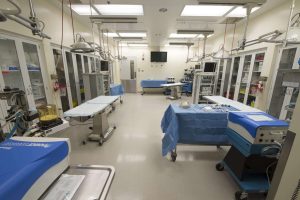
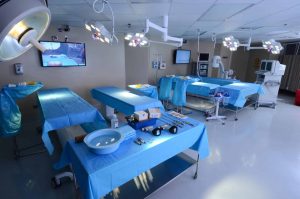
As surgical techniques become more sophisticated, hands-on spine cadaver training provides an important opportunity for surgeons to study human anatomy, practice surgical approaches, evaluate instruments and implants, and become familiar with emerging technologies in a controlled educational environment.
For spine surgeons, orthopedic and neurosurgical residency programs, fellowship programs, hospitals, academic medical centers, spinal implant companies, medical-device manufacturers, and surgical technology companies, cadaver-based training can be an important component of modern surgical education.
Current research describes a continuing shift toward minimally invasive, image-guided, robotic, augmented-reality, and data-driven spine surgery. At the same time, researchers continue to evaluate which technologies provide meaningful improvements in clinical outcomes versus improvements primarily in technical accuracy, workflow, or surgical reproducibility.
For organizations seeking human cadaver specimens for spine surgery training, Surgical & Medical Training Services (SMTS) provides human cadaver specimens and related logistical support for hands-on medical and surgical education.
What Are the New Advances in Spine Surgery?
Modern spine surgery is increasingly influenced by several major technology and procedural developments.
These include:
- Robotic-assisted spine surgery
- Computer-assisted navigation
- Augmented reality navigation
- Artificial intelligence
- Three-dimensional surgical planning
- Endoscopic spine surgery
- Minimally invasive spine surgery
- Lateral and oblique interbody approaches
- Advanced spinal implants
- Patient-specific surgical planning
- Intraoperative imaging
- Navigation-assisted instrumentation
- Technology-assisted deformity correction
A recent review of lumbar spine surgery described robotics, augmented reality, navigation, artificial intelligence, endoscopic procedures, and lateral interbody techniques as important components of the current evolution of spine surgery.
These technologies are not simply changing the operating room.
They are also changing how spine surgeons need to train.
Robotic Spine Surgery
One of the most visible developments in modern spine surgery is the increasing use of robotic-assisted systems.
Robotic platforms are generally designed to assist the surgeon rather than independently perform the operation.
Depending on the system and procedure, robotic technology may assist with:
- Surgical planning
- Instrument trajectory
- Pedicle screw placement
- Implant positioning
- Navigation
- Intraoperative imaging
- Reproducibility of surgical workflows
Pedicle screw placement has been one of the most widely studied applications of navigation and robotic assistance.
Research has demonstrated high technical accuracy with robotic-assisted instrumentation, although comparisons with conventional and navigation-assisted techniques continue to evolve. A 2026 meta-analysis of 16 comparative studies involving more than 59,000 patients evaluated robotic-assisted versus navigation-guided spinal surgery and examined perioperative, clinical, and complication outcomes.
For surgeons learning robotic spine surgery, understanding the underlying anatomy remains essential.
The robot does not eliminate the need for anatomical knowledge.
Instead, the surgeon must understand how the technology interacts with the anatomy.
That is one reason robotic spine cadaver training can be valuable for surgeons and medical-device companies introducing new technology.
Computer-Assisted Navigation in Spine Surgery
Computer-assisted navigation has become an important component of modern spine surgery.
Navigation systems can integrate preoperative or intraoperative imaging with surgical planning and instrument tracking.
Potential applications include:
- Pedicle screw placement
- Spinal instrumentation
- Deformity correction
- Tumor surgery
- Minimally invasive procedures
- Revision surgery
- Complex anatomy
- Cervical spine procedures
- Thoracic spine procedures
- Lumbar spine procedures
The evolution of navigation has increasingly connected imaging, planning, and intraoperative guidance.
A recent review describes modern computer-assisted spine surgery as moving from traditional fluoroscopy-based approaches toward integrated navigation and robotic systems incorporating preoperative planning, intraoperative imaging, and real-time tracking.
Augmented Reality Spine Surgery
Augmented reality (AR) spine surgery is another rapidly developing area.
AR systems can place digital infor