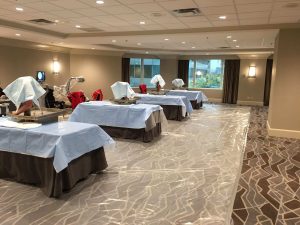
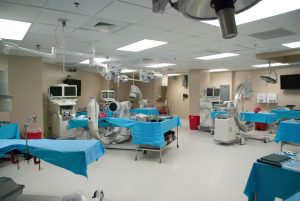
For a surgical resident or fellow, a well-designed Bio Skills cadaver course can provide something that is difficult to obtain during routine training: repeated, deliberate practice on realistic human anatomy without the pressure and consequences of operating on a live patient.
The biggest benefits for residents and fellows
1. They can learn anatomy in three dimensions
Textbooks, lectures, CT/MRI images, and surgical videos are important, but they don’t fully reproduce the experience of being inside the operative field.
Cadaver training allows the trainee to:
- See anatomical structures in their actual relationships.
- Develop three-dimensional spatial awareness.
- Identify landmarks used during surgical exposure.
- Appreciate anatomical variation.
- Understand what lies immediately beneath and around the operative field.
For spine, vascular, orthopedic, neurosurgical, and other specialties, this can be especially valuable.
2. They can practice without putting a patient at risk
This is perhaps the most important benefit.
A resident can make a mistake in a cadaver lab and learn from it.
They can:
- Take the wrong dissection plane.
- Position an instrument incorrectly.
- Struggle with exposure.
- Discover that their planned approach doesn’t provide adequate visualization.
- Repeat the maneuver.
- Ask the attending for feedback.
- Try it again.
That creates a safe environment for learning through mistakes.
Simulation literature in surgery generally supports this concept: trainees can acquire technical skills in simulated environments without exposing patients to the consequences of early practice. Evidence for direct improvement in patient outcomes is more limited, so the course should be viewed as a complement to—not a substitute for—supervised clinical experience.
3. They develop hands-on surgical skills
There is a tremendous difference between watching someone perform a procedure and actually performing it yourself.
Cadaver training gives residents and fellows the opportunity to practice:
- Instrument handling
- Tissue dissection
- Retraction
- Exposure
- Surgical approaches
- Suturing
- Anastomotic techniques
- Hardware placement
- Decompression
- Tissue handling
- Procedural sequencing
The trainee begins developing muscle memory and technical familiarity.
4. They can repeat difficult maneuvers
In the operating room, a resident may get only one opportunity to perform a particular step.
In a Bio Skills laboratory, the instructor can say:
“Let’s do that again.”
That is extremely valuable.
The trainee can perform a maneuver, receive immediate feedback, correct the technique, and repeat it until the movement becomes more natural.
That’s deliberate practice, rather than simply accumulating operative cases.
5. They become more comfortable with difficult anatomy
Residents and fellows frequently encounter anatomy they haven’t personally dissected before.
Cadaver training can expose them to:
- Normal anatomical variation
- Difficult exposure
- Deep surgical planes
- Small or difficult-to-identify structures
- Neurovascular relationships
- Scarred or altered anatomy when appropriate models are available
- Unusual anatomical configurations
That experience can make the transition to real cases less intimidating.
6. They can learn from experienced surgeons
One of the most valuable parts of a good Bio Skills course isn’t actually the cadaver.
It’s the faculty standing beside the trainee.
A skilled attending can demonstrate:
“Here’s where I start.”
“Here’s the plane I look for.”
“Don’t pull here because you’ll put tension on this structure.”
“Here’s how I get better exposure.”
“If you encounter this situation, here’s another way to approach it.”
That creates a highly concentrated learning experience that may take many months or years to acquire solely through clinical cases.
7. They can learn procedures they haven’t had enough opportunities to perform
Case volume isn’t always predictable.
A resident might graduate having seen numerous procedures but having personally performed relatively few.
A cadaver course can help fill those gaps.
For fellows, this becomes even more important because training often involves advanced procedures that they may not encounter frequently enough to develop complete technical familiarity through clinical exposure alone.
8. It can improve their operative readiness
A resident who has physically performed a procedure in a cadaver laboratory walks into the operating room with a different understanding.
They have already experienced:
Where do I start?
What am I trying to expose?
What structures should I expect to see?
What is my next step?
What could go wrong?
That doesn’t make them independently competent—but it can make them better prepared to participate effectively under supervision.
9. It can accelerate the transition from “observer” to “surgeon”
This is one of the biggest educational advantages.
There is a progression:
See it → understand it → practice it → receive feedback → repeat it → perform it under supervision → eventually perform it independently when appropriately trained.
Cadaver training occupies an important middle portion of that progression.
Instead of simply watching the attending perform a procedure 10 times, the resident gets the opportunity to perform the procedure themselves in a controlled environment.
10. It can improve confidence without giving false confidence
This distinction is important.
The goal isn’t for a resident to leave a Bio Skills course thinking:
“I can now perform this operation independently.”
The appropriate outcome is:
“I understand the anatomy better, I’ve practiced the technical steps, I know where I struggle, and I know what I need to continue working on.”
That’s informed confidence.
Why the quality of the cadaver course matters
Not all cadaver courses provide the same educational value.
For residents and fellows, I would look for a program that provides:
- High-quality human tissue
- Small trainee-to-faculty ratios
- Substantial hands-on time
- Appropriate surgical instrumentation
- Realistic anatomical preparation
- Experienced faculty
- Structured objectives
- Immediate feedback
- Opportunities to repeat procedures
- Multiple specimens when possible
- Respectful and ethical donor practices
The difference between watching a demonstration and having your hands on the anatomy for several hours with an expert correcting your technique can be enormous.
The bigger Bio Skills opportunity
If you’re developing or promoting a Bio Skills program, I think the most compelling message for residency and fellowship programs is:
“Don’t just teach the procedure. Let the trainee perform it.”
And perhaps even more importantly:
“Give surgeons the opportunity to make their mistakes in the laboratory, learn from expert faculty, and build technical proficiency before those skills are needed in the operating room.”
That’s the fundamental educational value of high-quality cadaver simulation.
It isn’t intended to replace real surgical cases. It makes the real surgical cases more educational because the trainee arrives with a foundation of anatomy, procedural familiarity, and hands-on experience.