Orthopedic surgery has evolved rapidly in the last few years (2024–2026), driven by robotics, AI, biomaterials, and regenerative medicine. Here are the most important recent advances—and why they matter clinically.
🦾 1. Robotic-assisted surgery (major game changer)
One of the biggest shifts is the widespread adoption of robotic systems in procedures like knee and hip replacements.
What’s new:
- Preoperative 3D CT-based planning
- Robotic arms guiding bone cuts with sub-millimeter precision
- Real-time adjustments during surgery
👉 Benefits:
- Better implant alignment
- Less tissue damage
- Faster recovery
Robotic systems now allow surgeons to follow a personalized surgical plan with extremely high accuracy, improving outcomes and consistency.
🧠 2. Artificial intelligence (AI) in surgical planning & diagnosis
AI is increasingly integrated into orthopedic workflows—not just surgery itself.
Key uses:
- Predicting optimal procedures (e.g., partial vs total knee replacement)
- Automated fracture detection on imaging
- Surgical decision support
AI models can now analyze imaging and clinical data to guide surgeons and improve preoperative planning.
👉 Big impact:
- More personalized treatment decisions
- Reduced diagnostic errors
- Better surgical outcomes
🧬 3. Cartilage regeneration & tissue engineering
Instead of replacing joints, newer approaches aim to repair or regrow damaged tissue.
Advances include:
- Stem-cell-based therapies (still evolving)
- Bioengineered scaffolds for cartilage repair
- New implants that regenerate both cartilage and bone simultaneously
These technologies aim to treat joint damage earlier and potentially delay or avoid joint replacement.
👉 Why it matters:
- Could transform treatment of osteoarthritis
- Especially useful for younger patients
🦿 4. Smart implants (next-generation joint replacements)
Modern implants are becoming “intelligent.”
Features:
- Embedded sensors that track:
- Movement
- Load
- Recovery progress
These implants can send data back to physicians for monitoring and optimization of recovery.
👉 Future potential:
- Early detection of complications
- Personalized rehab protocols
🧩 5. 3D-printed & customized implants
Instead of “one-size-fits-all,” implants are increasingly tailored to each patient.
What’s new:
- Patient-specific implants created using 3D imaging
- Better anatomical fit and alignment
This improves surgical precision and long-term implant success.
🔪 6. Minimally invasive surgical techniques
Orthopedic procedures are becoming less invasive.
Improvements:
- Smaller incisions
- Less muscle disruption
- Reduced blood loss
👉 Outcomes:
- Shorter hospital stays
- Less pain
- Faster recovery times
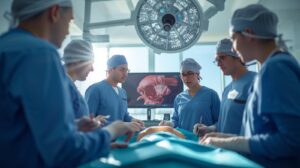
🧭 7. Real-time navigation & augmented surgery
Surgeons now use advanced navigation systems similar to GPS.
Capabilities:
- Real-time tracking of instruments
- 3D visualization during surgery
- Improved accuracy in implant placement
These systems enhance precision and reduce complications.
🔮 8. Emerging frontier: semi-autonomous surgery
Still early, but rapidly developing:
- Robots learning to perform parts of procedures
- AI-assisted intraoperative decision-making
- Simulation-based surgical training
Early research shows robotic systems may soon move beyond assistance toward partial autonomy in specific tasks.
💡 Bottom line
The biggest themes in modern orthopedic surgery are:
- Precision → robotics + navigation
- Personalization → AI + custom implants
- Preservation → cartilage repair & biologics
- Data-driven care → smart implants
👉 In simple terms:
Orthopedic surgery is shifting from “mechanical repair” to high-tech, personalized, and increasingly regenerative medicine.